
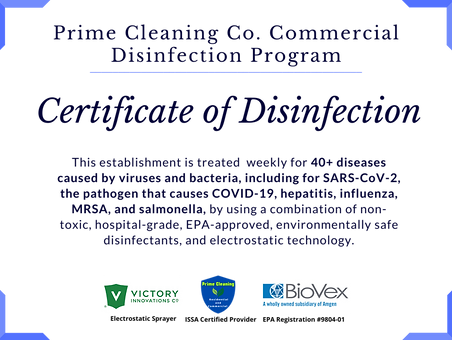
.png)



Maintenance Disinfecting Program
Regularly scheduled treatments for high-traffic spaces such as vehicles, bathrooms, and seats, on a weekly, bi-weekly, or monthly basis.
Move-in/Move-out
Sanitizing and disinfecting for move-ins and move-outs, or after construction. Our Safe & Clean seal at your door will be inviting and reassuring to your tenants and guests.
Emergency Decontamination
Recommended when you have a suspected or confirmed case of a pathogen such as COVID‑19 and need rapid intervention to decontaminate affected areas and help reduce the risk of further exposure.
Service Areas
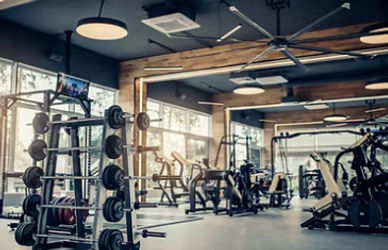
Suitable for all businesses with high-traffic areas such car rental and showrooms, gyms, retail stores, entertainment venues, clinics, and hospitality.
Our 4-STEP DISINFECTING PROCESS centers around the touchless application of safe, EPA-approved, hospital-grade, virucide over the entire area of concern via ultra-fine mist. Atomized electrostatic ULV (Ultra Low Volume) provides 360º coverage and disinfects all surfaces evenly, and safely, including in hard-to-reach places
Step 1: Cleaning Surfaces
Clean vertical and horizontal surfaces to remove soil, dirt, and dust. Getting rid of dirt is an essential component of a robust infection prevention program, as dirt is rich in nutrients that feed bacteria and other pathogens.
Additionally, it’s important to remove visible dirt prior to disinfection, as it can affect the efficacy of the disinfectant being used. Microfiber dusters, cloths, and flat mops are great at picking up not only dirt but also unwanted pathogens to enhance cleaning.
-
When cleaning horizontal surfaces, operate in either a left-to-right or a right-to-left motion. Make sure you’re consistent in your direction so you’re not spreading dirt and pathogens over surfaces you just cleaned.
-
For vertical surfaces, start at the top of the room and move down.
-
Lastly, clean the floor with a damp microfiber flat mop. Dust and dirt that aren’t collected by the microfiber products in the first wipe will fall down to the floor and should be picked up with the flat mop.
Step 2: Disinfecting High-Touch Surfaces
Disinfect all hard, nonporous surfaces with a safe disinfectant that is EPA registered, like those recommended for use against COVID-19. This includes all high-touch surfaces, such as:
-
Handrails
-
Light switches
-
Doorknobs
-
Bedrails
-
Faucet fixtures
-
Toilet flushers
-
Nurse call cords
Be sure to read each chemical manufacturer’s label for guidance on pathogens it’s able to kill as well as the amount of time the surface must remain wet (known as dwell time or contact time) in order to achieve that kill. If the disinfectant doesn’t remain wet on the surface for that full time, there will not be a 100% kill.
Two-in-one cleaners and disinfectants can prove to be effective cleaning solutions and great time savers if applied properly. Once again, before you disinfect surfaces, it’s important that you read the manufacturer’s labels for the proper procedure and to avoid any harmful effects of cleaning products.
Step 3: Enhanced Cleaning
Rinsing after cleaning may be needed because some disinfectants can be damaging to the surface, harmful to humans if ingested or leave behind a residue.
To avoid damage to surfaces, make sure the disinfectant is safe for application on the particular surface you’re trying to disinfect. This information can typically be found on the chemical manufacturer’s label.
Some disinfectant products are ineffective against certain pathogens like C. diff, which may require you to choose a more powerful and possibly more caustic chemical. In those cases, you’ll want to be sure that you limit the disinfectant’s use to just those surface areas of concern and follow up with a clean-water rinse as soon as the dwell time has been met.
When disinfecting in food environments, such as kitchens and dining rooms, it’s critical that a clean-water rinse is performed to prevent people from ingesting the chemicals.
Some surface disinfectants can leave behind a residue. While not all chemical residue left behind is harmful to surfaces or humans, it is often unsightly. A simple rinse with a wet cloth can take care of the issue and keep your community looking neat and tidy.
Step 4: Applying EPA-Approved Pathogen Killer
We then apply BioVex T® IPA-Certified Disinfectant, using Victory Innovations®' Electrostatic Sprayers.
Electrostatic sprayers have the ability to efficiently and effectively coat virtually all surfaces, including hard-to-reach areas that are often overlooked or missed during the regular cleaning, sanitizing, and disinfecting steps. They are an invaluable ally in the fight against germs and bacteria.
These sprayers offer an enhanced level of disinfection by using electrically charged water/chemical molecules to fully coat a surface. The sprayer provides the liquid with a positive charge so it is naturally attracted to the negatively charged surfaces that exist in nature. This ultimately leads to a fuller and more even coating.
.


.png)